It has been over a year already since I started my program and I’m long overdue to provide an update. I just recently wrapped up my ninth class, which was a whirlwind dive into humanistic, transpersonal, and existential psychologies. My next class covers the various qualitative research study designs. I immensely enjoy the deep work of thinking and problem solving instead of the endless tedium and chaos management of an office environment. I feel more at home and at ease in an academic setting than I ever felt in an occupational one.
Coursework is secondary in a Ph.D. program. The dissertation is truly the primary focus, and I have made some incremental progress since I started my program. I have changed my dissertation topic twice due to feasibility issues, but my current topic appears to be one that will stick. I will be studying accountants’ soft skills that contribute to individual and firm success. I chose this topic because I had noticed that the accounting industry itself professes to highly value soft skills, but this is not necessarily the case in my experience at individual firms. Promotion and compensation decisions are often based primarily on technical proficiency, which is also the skill set that tends to be most valued by one’s peers. This disconnection needs to be explored to have a better understanding of just what exactly is required in practice for accountants to be successful in their jobs. Additionally, AI is quickly making inroads in the accounting industry, and it will likely absorb at least some work that now require technical skills, making soft skills (“human” skills) even more vital in the future.
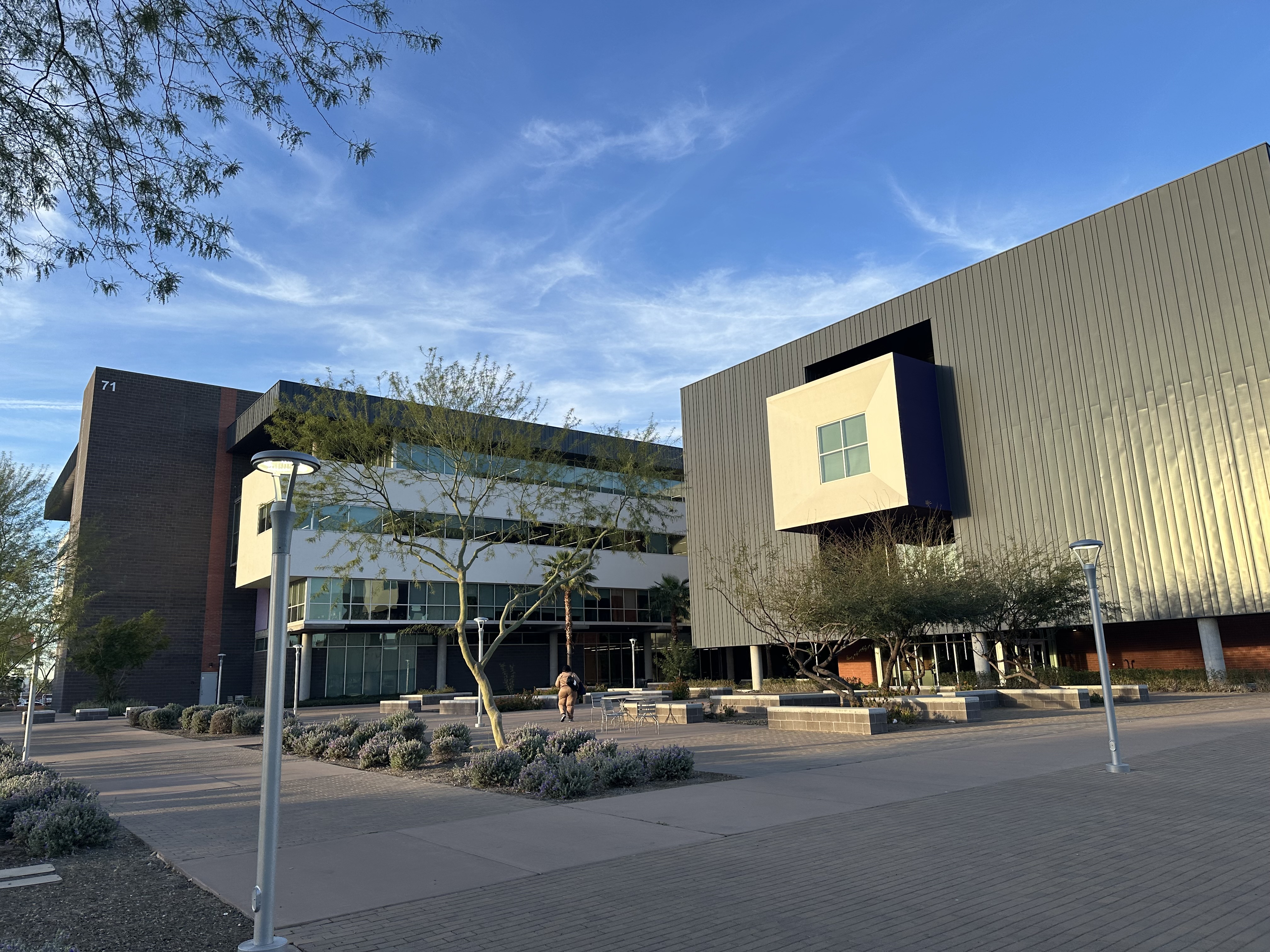
In February 2026, I spent a week on campus in Phoenix for the first of my two “residencies.” Residencies provide the opportunity to work in person alongside fellow researchers and under the direction of faculty. My colleagues and I solidified our individual dissertation topics and began formulating and practicing our arguments to “defend” our choice of topic, research methodology, and design. I will undergo a formal version of this defense, called the proposal defense, likely in the spring of 2027. If my defense is successful, I will be considered a “Ph.D. candidate” and can move forward with my research study.
Diversity was one aspect of my residency that I was particularly impressed with. In my class of twenty or so, I was only one of two white men. While we had only one African American man, we had seven white women and eight black women, three of whom were from overseas. One had climbed Kilimanjaro shortly before our residency, so in our downtime we often exchanged climbing stories, and we continue to remain in touch. Eight of us were over forty years old, and of those, four were over fifty. I think this diversity is an indication that power structures in the future will look less white and a lot less male. Hopefully, they will be representative of all of humanity, not just segments of it.
Though I was ready to get home at the end of the week, I loved being on campus and in the academic atmosphere. I am not sure why it appeals so much to me, but I need to listen to this. In time I will figure out what it means.
I am currently on track to graduate in late spring or early summer 2028. While that timeline includes some cushion, I still expect setbacks that may extend it. Practically everyone I know with a Ph.D. has experienced delays in their research or in their dissertation writing. I’m expecting Murphy’s Law to strike at some point. If it never does, I’ll consider myself fortunate.
This program is a lot of work and it is anything but easy. I average around thirty hours per week on class assignments, though I routinely exceed fifty hours during busy weeks when papers are due. This doesn’t leave me a lot of time for much else (including, say, blog writing…). Still, I enjoy even the long days because I know that I will miss this when I’m done.

As I move through this phase of the program, I’m increasingly aware that the value of all this work reaches well past graduation. This degree means more to me than just an academic credential. I am working on an identity more than an achievement, and I think that is what gives the work its weight.
My doctorate was not a random aspiration but a deep, persistent longing I had felt for some time. It’s the convergence point for a variety of long-held passions: leadership, writing, making our organizations and institutions more human, and a desperate need for authenticity. I think being a writer and a Ph.D. are complimentary and reinforce each other. Writing and scholarship are both acts of stewardship, requiring us to think deeply and speak responsibly for the benefit of something greater than ourselves.
A Ph.D. will allow me to publish work that influences policy and future leaders, to join a community that values depth instead of just task completion, to turn my lived experience into something that helps others, and to leave a legacy of thought and discernment.
The point is for it to matter and to actually change something in the world rather than just sit on my CV. I want to stop asking what the experts say and instead start contributing to the conversation. My dissertation is my first major contribution to the world’s understanding of something that matters.
I hope to provide more frequent updates in the future.


